The quality of conveyor belt materials directly affects the efficiency, durability, and reliability of the system.
The conveyor belt must not only move a product from one point to another, but must also work correctly in real conditions of use : weight and characteristics of the transported material, speed, friction, inclination, presence of humidity or aggressive substances, cleaning requirements and frequency of use.
For this reason, the choice of material cannot be evaluated separately from the rest of the system.
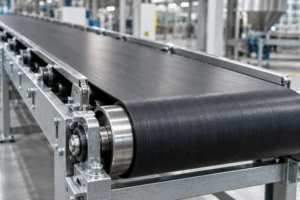
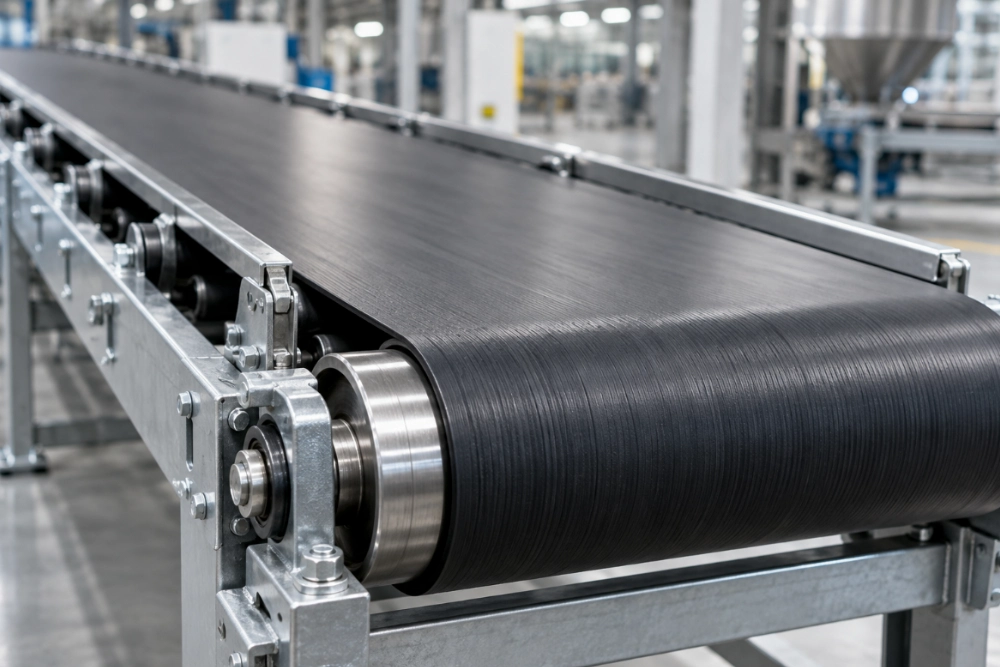
In our belt conveyors the belt is generally composed of a polyester fabric base and a covering in contact with the product, which can be made of PVC, polyurethane, rubber or other materials depending on the application.
Why the quality of the material affects the functioning of the tape
Material suited to the working conditions helps maintain smooth movement, limit wear and reduce the risk of problems during operation.
The stresses to which a belt is subjected vary greatly from one system to another.
Transporting boxes or lightweight packages requires different characteristics than handling metal components, loose products, or food. Likewise, a belt installed on a flat section operates under different conditions than one designed to ascend or descend.
Among the aspects that influence the choice of carpet are:
- weight, shape and surface of the product;
- presence of sharp edges or abrasive materials;
- conveyor speed;
- inclination of the path;
- level of grip required;
- presence of oils, greases or humidity;
- cleaning and sanitization needs;
- environmental and operating conditions.
Quality therefore does not only depend on the material used, but above all on its compatibility with the application .
PVC, polyurethane and rubber: different characteristics for different needs
PVC, polyurethane, and rubber are used in conveyor belts to meet different needs . The choice always depends on the product being transported and the system conditions.
| Material | Features to consider | Typical applications / needs | Aspects to check when choosing |
| PVC | Versatility and possibility of different surface finishes. | Handling of boxes, packages, components, and numerous industrial products. | Friction required, environmental conditions, presence of oils or humidity. |
| Polyurethane (PU) | Also suitable for applications where cleanliness and hygiene are particularly important. | Food sector and other contexts with specific cleaning needs. | Suitability of the specific material for food contact, sanitation, and operating conditions. |
| Eraser | It can offer specific characteristics of adhesion and resistance to stress. | Movements where greater grip or particular mechanical performance is required. | Abrasion, product weight, inclination and required level of grip. |
| Surfaces and specific processes | Imprints, holes, longitudinal or transverse profiles and different friction coefficients. | Inclined paths, product positioning, sliding or containment needs. | Path geometry, product behavior and feed rate. |
Friction, surface and carpet processing
The belt surface also contributes to the conveyor’s behavior. Friction, footprints, and profiles must be chosen based on the required product movement.
adhesion is required . In others, however, the product must be able to slide over the surface without encountering excessive resistance .
Monti Impianti can use mats with high, medium, or low friction coefficients and provide different surface treatments, such as:
- fingerprints on the coating;
- punched holes;
- longitudinal profiles;
- transverse profiles.
These features can be particularly important when the product must negotiate an incline, maintain a precise position, or be guided along the path without unwanted slippage.
A higher friction coefficient is therefore not always preferable: it must be consistent with the type of movement required.
What happens when the material is not adequate
A carpet that is not suitable for the actual conditions of use may be subject to greater wear, progressively lose its characteristics or compromise the regularity of movement.
Consequences may vary depending on the application.
A surface with an incorrect level of friction can cause unwanted movement of the product. A material unsuitable for the presence of certain substances or operating conditions can deteriorate more rapidly.
Even greater wear on the carpet can translate over time into more frequent maintenance and early replacements.
Of course, the material isn’t the only factor to consider. Alignment, tensioning, rollers, structure, and maintenance all contribute equally to the system’s proper functioning.
To obtain a reliable result it is therefore necessary to evaluate the transporter as a whole.
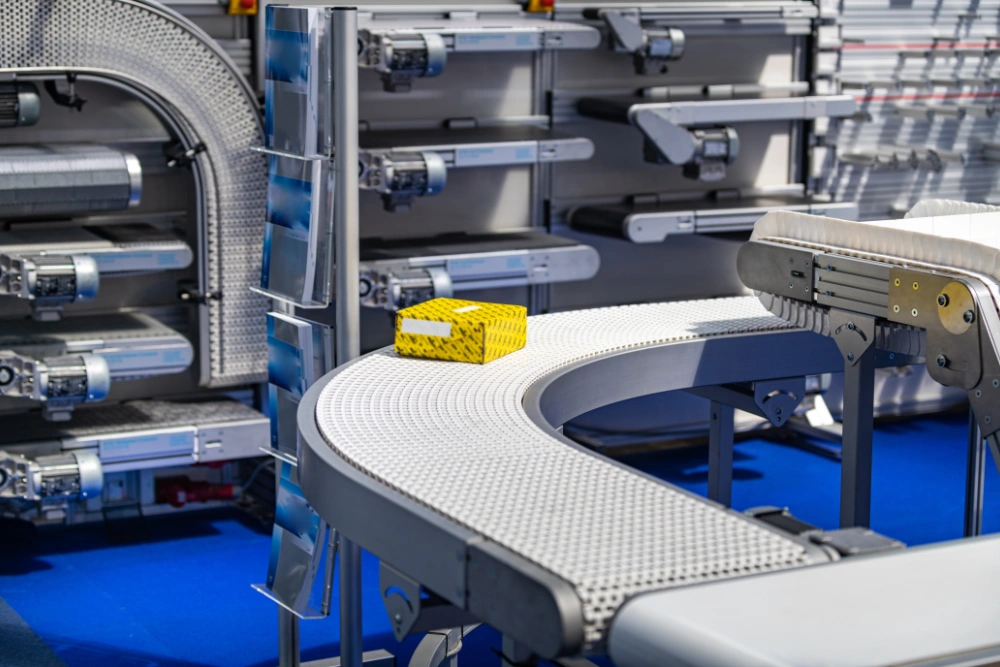
Quality starts from the design of the entire conveyor
The choice of conveyor belt must be integrated into the system design from the outset, together with the structure, route, speed and characteristics of the product being transported.
This is why in Monti Impianti it The study and design of handling systems begins with an analysis of the customer’s specific needs and the characteristics of the product to be transported.
The design may concern, among other aspects:
- size and geometry of the path;
- feed rate;
- type of carpet;
- tensioning systems;
- rollers;
- banks and containment;
- motorization;
- structure materials;
- cleaning and maintenance needs.
The frame material is also chosen based on the environment and application. The conveyors can be made, depending on your needs, from painted or galvanized steel, or from AISI 304 or AISI 316 stainless steel.
In the food and pharmaceutical sectors, for example, the choice of materials must also be evaluated considering the needs for cleaning, sanitation, and corrosion resistance.
Carpet and structure must therefore be designed as parts of the same system, not as independent elements.
Choosing the material means knowing the application
The starting question is not simply which material is the most resistant or best performing.
It is more useful to understand what characteristics the tape must have to work correctly in that specific production context .
The type of product, the route, the speed, the level of friction required and the environmental conditions help define the most suitable configuration.
A correct initial assessment therefore allows for a more informed choice of material and the design of a conveyor consistent with the real needs of the line.
The right material starts with a tailor-made design
The choice of belt material must take into account the product to be handled, the operating conditions and the characteristics of the entire system.
Monti Impianti designs and manufactures custom belt conveyors , choosing materials, configurations, and components based on the actual needs of the production line.
Do you need to identify the most suitable solution for a new system or to optimize an existing one? Contact Monti Impianti to discuss the most suitable configuration together.
FAQs about conveyor belt materials
What is the best material for a conveyor belt?
There’s no single best material. The choice depends on the product being transported, the route taken, the operating conditions, the cleaning requirements, and the performance required of the belt.
PVC is used in numerous industrial applications due to its versatility. However, the specific configuration must be chosen based on the product and the conditions of use.
Can polyurethane be used in the food industry?
It can also be used in food applications, but suitability for food contact must be verified on the specific material used and the related compliance documentation.
Is it possible to customize the surface of the carpet?
Yes. Depending on the handling, different friction coefficients, surface impressions, holes, or longitudinal and transverse profiles can be provided.